Cover Letters in the AI Era: Are They Still Relevant in the U.S. Job Market?
|
Cover letters have long been a staple of job applications, meant to convey a candidate’s motivations and qualifications beyond the resume. In today’s U.S. job market, their relevance is under debate – especially with the rise of AI tools (like ChatGPT) that can churn out a decent cover letter in seconds.
Some argue cover letters are an outdated formality that hiring managers barely skim, while others insist a well-crafted letter can still make a difference in a competitive hiring landscape.
This report examines current data and opinions from both hiring managers and job seekers to assess whether cover letters still matter, and how authenticity is being challenged by AI-generated applications.
Hiring Managers’ Perspectives
Many hiring professionals do still value cover letters – at least under the right circumstances. Surveys consistently show that a strong cover letter can positively influence hiring decisions. For example, in one 2023 survey of 625 U.S. hiring managers, 94% said cover letters impact their decision on whom to interview (with 1 in 4 calling the cover letter “very important”).
A large majority (around 83%) reported that they read most cover letters they receive, even at companies where a cover letter isn’t explicitly required. In fact, about 60% of companies do require a cover letter as part of applications, and 72% of hiring managers said they expect to see one even if it was optional in the job posting.
Nearly half of managers even admitted they sometimes read the cover letter before the resume. These figures suggest many employers continue to view the cover letter as a useful supplement: it can provide context about a candidate’s interest or explain things not obvious from a resume.
On the other hand, not all recruiters put much stock in cover letters. Some evidence points to a decline in the requirement of cover letters. Recruiters interviewed by Vox estimated only about 10–20% of jobs they see still explicitly ask for a cover letter. Data from Indeed showed just 2% of job listings on the site mentioned a cover letter requirement.
Even when cover letters are requested, hiring managers may only give them a perfunctory glance. Alex Alonso, chief knowledge officer at SHRM, notes that many hiring managers spend only a couple of minutes screening an application and often just check that a cover letter was included if it was asked for, rather than closely reading its content.
He estimates about two-thirds of hiring managers simply verify the candidate “understood the assignment” by providing a cover letter, without judging the prose in detail.
As one recruiting expert put it bluntly:
“Most employers don’t really put a lot of stock in what goes into the cover letter other than to demonstrate that the person understood that they should have one”.
Cover Letters Under Fire: Do Recruiters Even Care Anymore?
Indeed, there are prominent voices in HR who have been skeptical of cover letters for years. Back in 2017, an ex-Apple recruiter famously proclaimed, “Cover letters have got to die… They’re already starting to die. They’re on their way out. Let’s just cut them out and be done with it.”
More recently, Atta Tarki, co-founder of a recruiting firm, argued that cover letters have “been utterly useless for quite some time now.”
Such opinions reflect the frustration of some hiring professionals who feel a cover letter often rehashes the resume or offers little new insight. In highly technical or skills-focused industries, employers may prioritize portfolios, code samples, or skill assessments over a written letter.
The AI Impact: Automation vs Authenticity
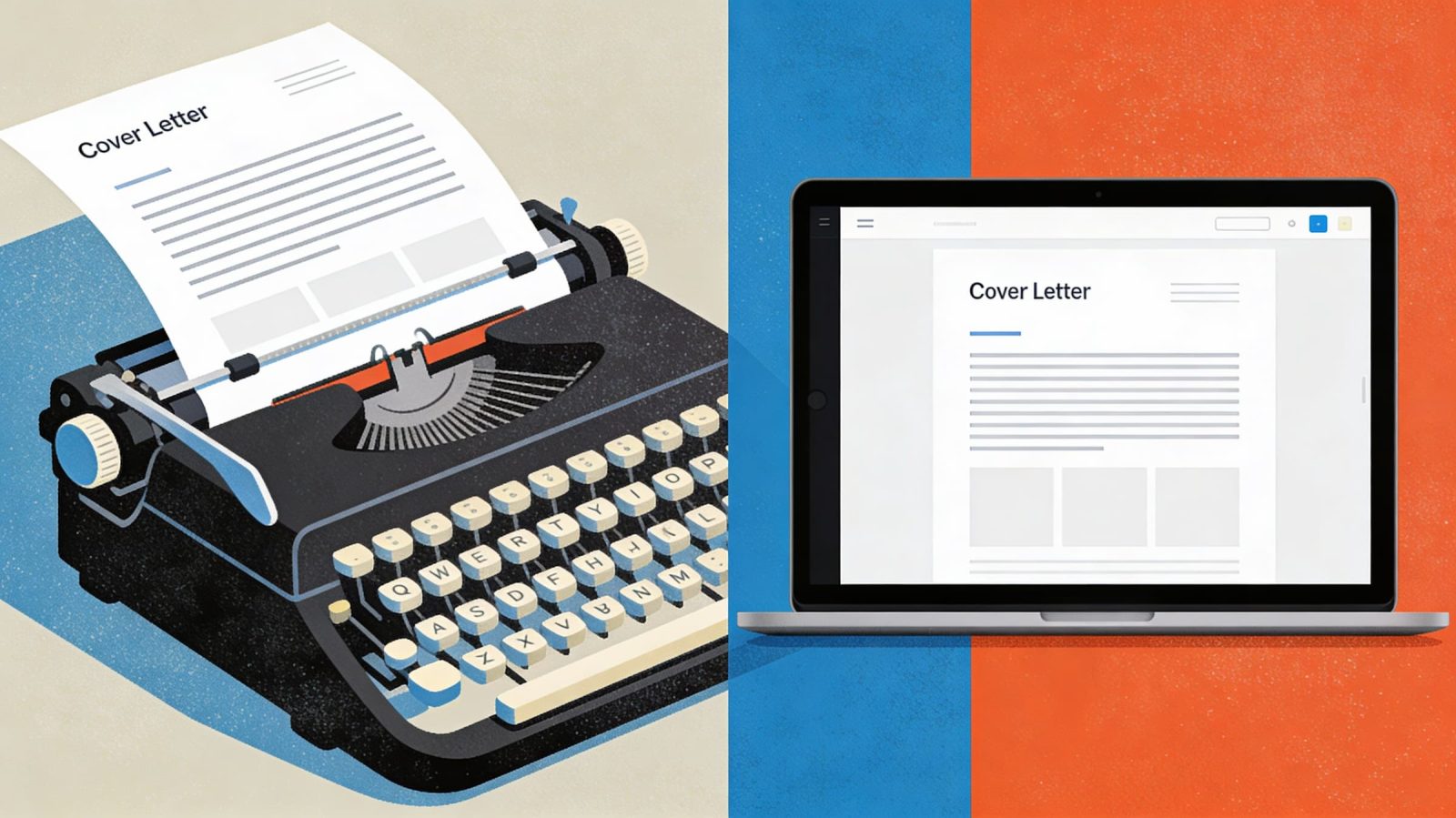
The emergence of easy AI writing tools has dramatically changed how job seekers handle cover letters. With generative AI like ChatGPT, candidates no longer need to agonize over each sentence themselves; they can prompt an AI to draft a decent cover letter and then lightly edit it.
This has led to a surge in AI-generated applications. By early 2023, nearly half of job seekers (current or recent) reported using ChatGPT or similar AI bots to help write their resumes or cover letters. (vox.com)
The convenience is undeniable: for someone applying to dozens of jobs, having an AI instantly produce a customized-sounding letter for each role is a game-changer. It allows candidates to apply to more positions faster – LinkedIn data shows U.S. applicants applied to ~15% more jobs in 2023 than the year prior, partly due to AI tools accelerating the process. In theory, this levels the playing field for candidates who aren’t strong writers or who simply don’t have time to author original letters for every application.
However, the very ease of auto-generating cover letters has created new concerns for hiring managers.
When every applicant can submit a polished paragraph of prose at the click of a button, a cover letter may no longer signal genuine interest or communication skill. Recruiters have grown wary of the “too generic” cover letters that AI often produces.
In surveys, 74% of hiring managers say they can usually tell when a cover letter or CV has been written with AI, due to telltale patterns and phrasing, and 80% admit they are uneasy or outright dislike seeing AI-generated content in job applications. In some cases, hiring professionals view heavy AI use as a red flag – a sign of low effort or authenticity.
The concern is that if a cover letter is composed by a chatbot, it may not reflect the candidate’s true voice, personality, or motivations. What was once meant to be a personal appeal from the candidate can turn into a boilerplate essay that feels detached from the applicant.
This authenticity problem has prompted some recruiters to take countermeasures. There are reports of companies experimenting with AI-detection software to flag cover letters that read as machine-written. Even without specialized tools, experienced hiring managers often trust their gut; overly formal, flawless-but-generic letters can raise suspicions.
In other words, if an applicant simply copies and pastes an AI-generated letter without tailoring it, it may backfire. But, not everyone in HR is anti-AI – some see it as a useful aid if used correctly.
The consensus among career experts is that candidates can leverage AI for a first draft or to overcome writer’s block, but they should then infuse the letter with their own voice and specifics. “Many applicants are now using AI to help them write cover letters — and that’s okay. Gen AI tools can be a great starting point to help you craft your message,” writes one Harvard Business Review contributor.
The key is that the final product should not sound like a robot. Johnson & Johnson’s career blog similarly advises job seekers to communicate authentically rather than relying wholly on generative AI, noting that writing in your own voice is likely to be more compelling to employers.
Ultimately, a personalized letter that clearly addresses the specific job and company will stand out far more than a cookie-cutter template, whether written by a human or a machine.
Key Trends and Statistics
To summarize the current state of cover letters in hiring, here are some key data points and trends from recent studies and surveys:
- Most hiring managers read cover letters: 83–87% of hiring managers say they read cover letters most of the time when one is submitted. And 94% claim a cover letter can influence their decision on whether to interview a candidate.
- But fewer jobs require them: Only ~10–20% of job postings explicitly require a cover letter, according to recruiter estimates, and an analysis found as little as 2% of online job ads mention cover letters. Many employers have made cover letters optional, especially for roles where a portfolio or skills test carries more weight.
- Cover letters can help borderline candidates: Nearly 50% of hiring managers say a strong cover letter could convince them to interview an applicant with a weaker resume. Conversely, 18% say a really poor cover letter might sabotage an otherwise qualified candidate. It can be a tie-breaker or tipping factor, for better or worse.
- Optional cover letters give an edge: Even when not mandatory, including a cover letter appears beneficial – 77% of recruiters surveyed said they favor candidates who attach a cover letter in optional scenarios. Not submitting one when it’s explicitly requested is almost always viewed negatively (often a disqualifying mistake).
- Many applicants skip them: Less than half of job seekers (around 47%) now add a cover letter to their application by default. Those who do write cover letters often keep them fairly generic; hiring managers complain that most letters they see are formulaic and merely summarize the resume.
- AI-written letters are on the rise: Approximately 46% of job seekers have used AI tools like ChatGPT to write or assist with their cover letters or resumes. This trend has increased the volume of applications and made it easier for candidates to apply broadly, but it also risks flooding employers with similar-sounding, impersonal letters.
- Authenticity is a concern: A significant share of hiring professionals are skeptical of AI-generated application materials – about 74% say they can detect AI usage, and 80% are averse to AI-written cover letters. Furthermore, 2 in 5 recruiters (39%) consider a blatantly AI-authored cover letter a deal-breaker that could eliminate a candidate. Employers still want to see the applicant’s own effort and personality shine through.
- Think beyond the immediate: Align your recruitment strategy with broader business goals and future needs. You’re not just filling seats; you’re building a legacy.
- Industry variations: Cover letters remain more relevant in some fields than others. Surveys indicate hiring managers find them especially valuable in roles emphasizing writing, communication, customer contact, or creativity. In contrast, in technical and engineering roles, a cover letter often carries less weight (and may be skipped unless a candidate needs to explain a career transition or gap).
Company size plays a role too: large companies receiving many applications may use cover letters to help differentiate between closely qualified candidates, whereas small startups might focus more on culture fit anecdotes in a cover letter.
Our Take: The Practicality and Future of Cover Letters
Cover letters are no longer the universal requirement they once were, but they are not dead across the board. In practical terms, a cover letter in 2025 serves a more nuanced, case-by-case purpose.
They are especially practical when you need to convey something not evident on your resume (such as explaining a career change, a gap, or a specific passion for the company).
That said, the heyday of the cover letter may be behind us. The trends indicate a slow but steady move toward optional use of cover letters and greater reliance on other screening tools. The rise of AI-generated cover letters has further eroded their credibility in the eyes of some employers.
It’s possible that in the near future, more companies will either drop the cover letter requirement or replace it with targeted questions (“briefly tell us why you’re interested in this role,” etc.) that are harder for an AI to auto-generate convincingly.
The format might evolve (for example, a concise e-mail style introduction or video cover letters could take the place of the old 4-paragraph letter). For job seekers, cover letters in their traditional form are now a strategic tool rather than a mandatory checklist item.
In conclusion, cover letters are down but not out. The format will likely continue to evolve (and perhaps shrink in usage), but the underlying need for candidates to communicate their motivation and uniqueness isn’t going away.
Moving Forward: Build a Strong Personal Brand
As AI reshapes hiring, how you present yourself matters. A clear personal brand—across your résumé, cover letter, and online presence—can help you stand out in today’s industrial job market.
Learn how to build a personal brand that supports your career goals in a tech-driven workforce.