
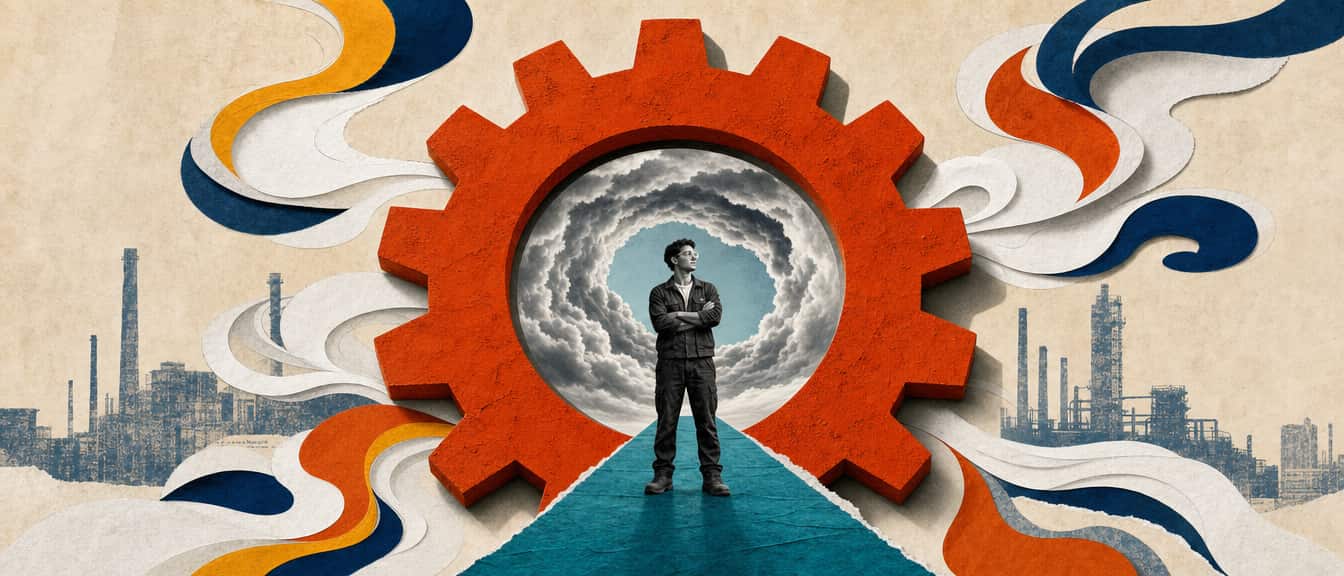
Manufacturing’s perfect storm: An aging workforce, turnover, and the skills gap
|
They say nobody’s hiring… Manufacturing has 83,000 open jobs in Indiana alone.
You’ve heard the story. Maybe you’ve lived it.
Your best machinist just gave notice. Retirement — earned, deserved, and 30 years of tribal knowledge walking out the door with him.
If this sounds familiar, it’s not because your plant is broken. It’s because three storms hit the same coastline at once — and pretending it’s a passing squall is the most expensive mistake a manufacturer can make right now.
Storm One: The silver tsunami is here, not coming
Nearly 1 in 4 manufacturing workers is 55 or older. In Indiana, it’s over 25% of the advanced manufacturing workforce. And in the roles you can least afford to lose, it’s worse: one regional study found 40–45% of machinists, welders, engineers, and plant managers were over 56.
Read that again. Almost half of your most critical skilled roles could empty out within a decade.
And a retirement isn’t just a vacancy. It’s a brain drain — the setup tricks, the machine quirks, the customer relationships that never made it into an SOP. Ninety-seven percent of manufacturers say they’re worried about losing that expertise. Worry isn’t a plan. Every month without structured knowledge transfer is a month of institutional memory you don’t get back.
Storm Two: The revolving door is eating your margin
Manufacturing has a PR problem, and it’s costing you money.
Somewhere along the way, everyone got sold the same script: four-year college or bust. Shop classes got cut. Trade programs shrank. And an entire generation absorbed the idea that factory work is dark, dirty, and dead-end — a stereotype about as current as a fax machine.
Only 38% of Gen Z believes the skilled trades offer strong career opportunities. Which means the majority is walking right past jobs that pay real money, can’t be outsourced to a chatbot, and come with something increasingly rare: an employer who actually needs you.
Because here’s what modern manufacturing actually looks like: robotics, CNC programming, mechatronics, advanced welding. Solid wages and benefits. Certifications and apprenticeships instead of five figures of student debt. And a hiring market where you have the leverage — because when a plant manager has watched half his skilled crew hit retirement age, a motivated person willing to learn isn’t just another applicant. They’re the succession plan.
One more stat, because it matters for your future, not just your first day: more than 90% of workers who complete an apprenticeship stay with their employer. These aren’t gig jobs. They’re careers with a floor under them.
Storm Three: The pipeline behind you is nearly empty
Here’s the storm that turns a bad year into a bad decade: the people leaving aren’t being replaced. Deloitte and The Manufacturing Institute project 2.1 million manufacturing jobs could go unfilled by 2030
Employers know the pipeline is empty, so the smart ones are training people themselves — apprenticeships, paid upskilling, mentorships where a 30-year toolmaker teaches you everything the manual doesn’t say. Companies that once demanded five years of experience for entry-level pay are learning, the hard way, that they need to grow their own talent. They don’t need to arrive finished. They need to arrive.
The feedback loop that makes it all worse
These three storms feed each other, and that’s the part that punishes waiting. Retirements create vacancies. Vacancies force overtime. Overtime burns out your core crew. Burnout drives absenteeism, then quits. Quits make the plant look chaotic to candidates, which makes hiring harder, which forces more overtime.
Every quarter you treat this as a temporary labor-market blip, the loop tightens. Your competitors who treat it as a strategic problem are already pulling from the same shrinking pool — with a head start.
Where Crown fits
Crown Staffing recruiters work with the actual plants doing the actual hiring across Kentucky, Indiana, Ohio, Missouri, Alabama, Georgia, Illinois, Iowa, Kansas, Michigan, Nebraska, North Carolina, Wisconsin, South Carolina, Virginia, Mississippi, Oklahoma, and Tennessee. We know which way local wages are moving, which shifts people will actually take, and where the reliable workers are, because we’ve already met them. Our recruiters vet for the things a resume keyword can’t show: whether someone shows up, whether they’ll stay, whether they can grow into the maintenance tech you’ll need in three years.
And because we don’t ghost our candidates, our candidates don’t ghost your shift. The pipeline we bring you is warm, loyal, and local — built on the same accountability we’re offering you.
The storm is real, and it isn’t passing. But the manufacturers who treat workforce strategy with the same rigor as production strategy will come out the other side with something rare: a stable, skilled team while their competitors are still refreshing a job board.
Real candidates. Real accountability. A partner, not a portal.
Talk to Crown Staffing about a workforce plan built for the next decade — not just next quarter.
Turn the skills gap into your opportunity
The manufacturing workforce is changing fast. Crown Staffing helps job seekers connect with employers looking for dependable people ready to learn and grow.